
Introducing Polycycl
The Plastic Recycling Gap
Globally, less than 10% of plastic waste is recycled today. Mechanical recycling, which dominates current practices, depends on relatively clean and well-sorted streams such as PET or HDPE bottles and converts them into secondary recyclates. While effective for select applications, these recyclates are generally lower in performance and purity than virgin polymers, limiting their use in food-grade packaging and other performance-sensitive applications.
As a consequence, a substantial share of plastics continues to follow a linear pathway of fossil extraction, manufacturing and disposal. Over time, this linear model has resulted in nearly 5 billion tonnes of post-use plastic accumulating across landfills, oceans and urban ecosystems.
A large portion of this accumulated waste consists of flexible packaging films, single-use carry bags and food-contaminated plastics that are not suitable for conventional mechanical recycling. Owing to their mixed composition and contamination, these materials are typically landfilled or incinerated. This not only leads to the loss of embedded carbon and material value but also contributes to higher greenhouse gas emissions, reinforcing the structural gap in today’s recycling system.
This is where Polycyl comes in
PolyCycl is a circular economy technology company tackling one of the most persistent environmental challenges of our time – plastic waste.
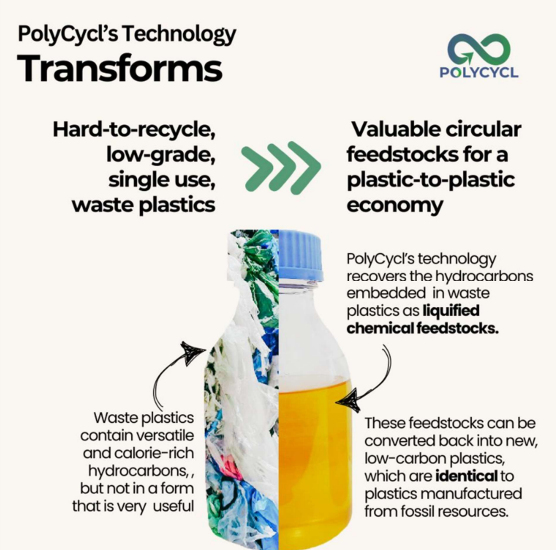
Founded in 2016, the company has developed patented technology that converts hard-to-recycle plastics, such as single-use polythene bags, flexible polyolefin packaging films and food-contaminated items like ketchup bottles, into liquefied hydrocarbon oils. These oils serve as high-value circular feedstocks for producing new low-carbon plastics, renewable chemicals and sustainable fuels, effectively transforming environmental waste into new, valuable materials.
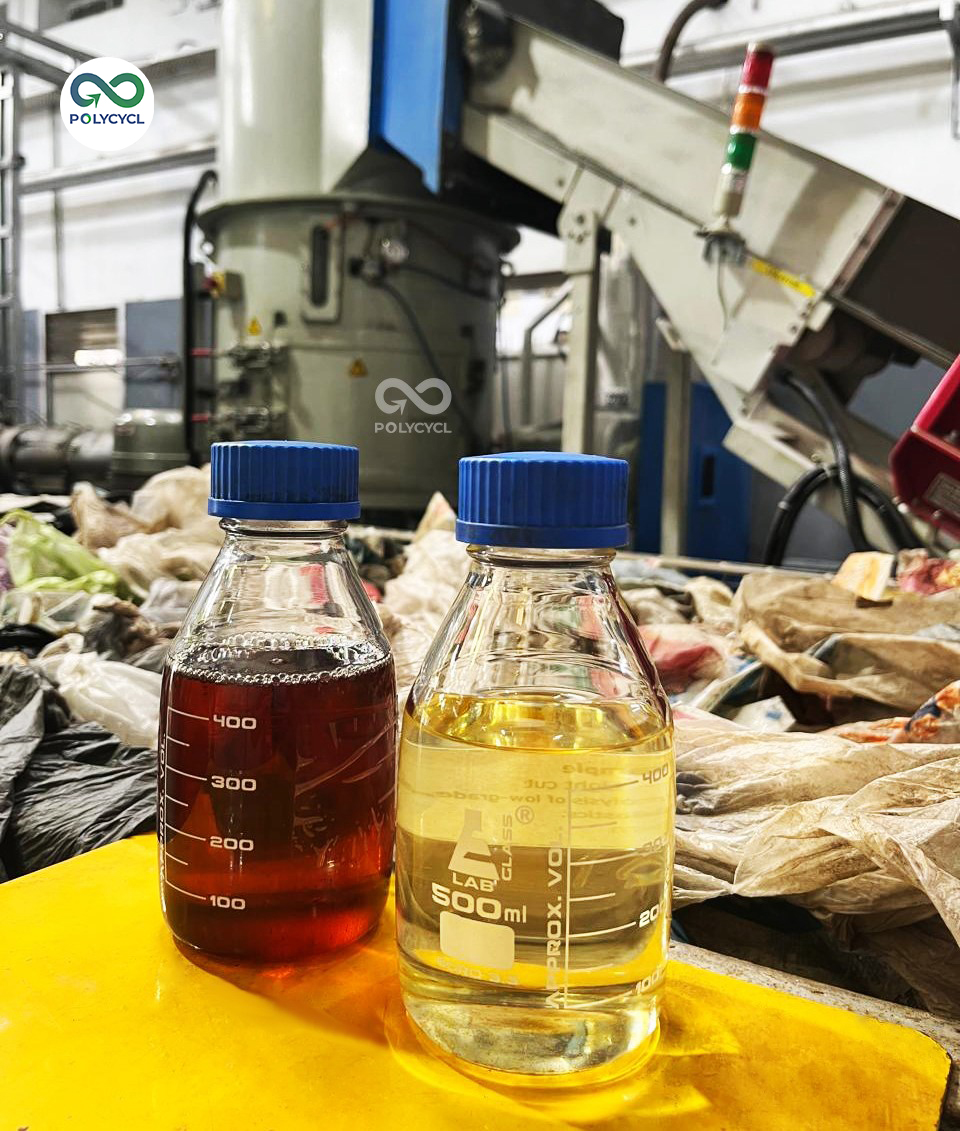
By converting complex plastic waste back into its molecular building blocks, the technology enables true plastic-to-plastic circularity. The company’s technology enables a pathway where hard-to-recycle plastics can be endlessly recycled in a closed loop to produce new plastics that are 100% identical to those manufactured conventionally from fossil crude.
Why We Chose to Invest?
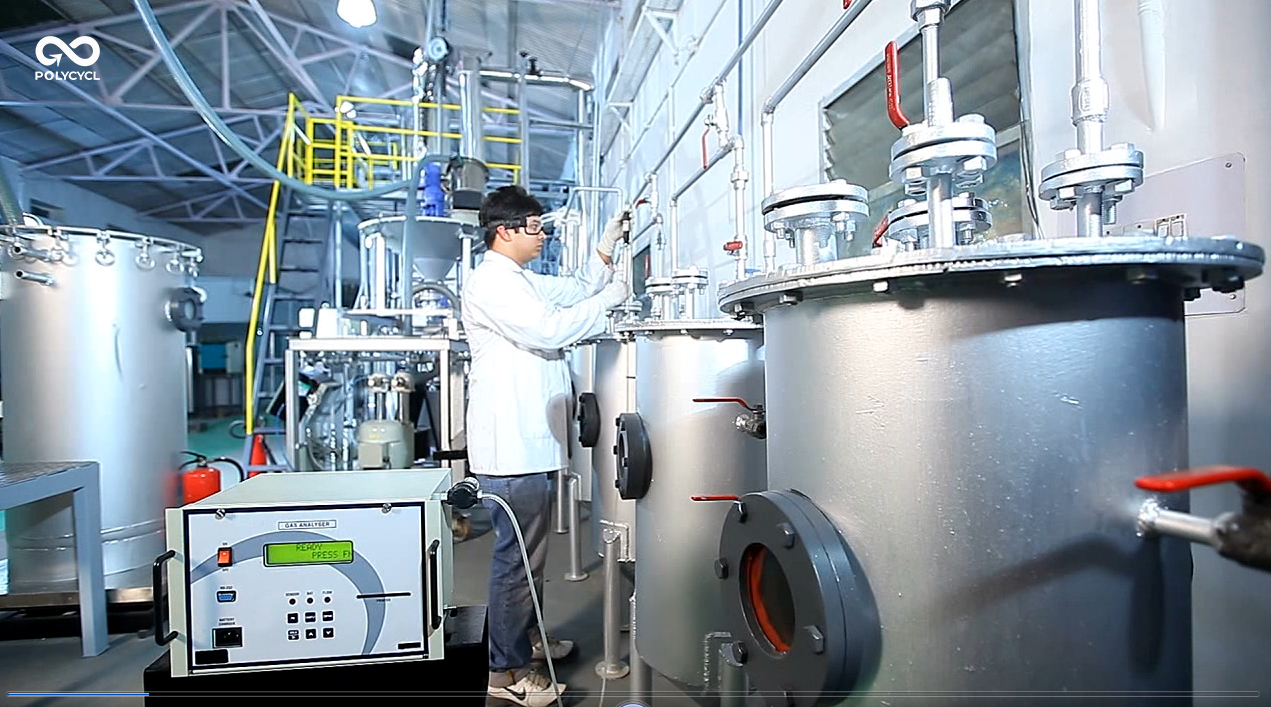
PolyCycl’s technology has evolved over six generations of development, resulting in a robust and scalable industrial solution.
The platform is designed to process unwashed polyolefin plastics sorted from waste and landfill streams. Its fully-continuous, non-batch conversion process – enabled by patented process architecture and reactor design – supports stable operations, high uptime and conversion yields of 65%-80% (by weight). The modular configuration allows individual conversion trains to process large capacities of feedstocks, with multiple trains numbering-up to achieve mega-scale conversion plants, where need be.
The operational and business fundamentals of the technology are equally compelling.
The proprietary continuous process architecture enables capital costs estimated to be one-half to one-fourth of comparable chemical recycling technologies developed in Europe and the United States. At the same time, the circular chemical feedstock produced supports attractive project-level EBITDA exceeding 50%. The company intends to scale primarily through an asset-light global licensing model, partnering with industrial operators to accelerate deployment.
Beyond the technology itself, the platform aligns with India’s national priorities – Make in India and the Swachh Bharat Abhiyaan. Aside from addressing plastic pollution, the technology strengthens domestic capabilities in advanced recycling and supports reduced dependence on imported fossil resources.
Alignment with India’s EPR Framework
India’s Extended Producer Responsibility framework for plastic packaging, notified in 2022, mandates progressively increasing recycling targets and compulsory use of recycled content, including 10% recycled content in flexible packaging and 30% in rigid packaging by 2025–26.
One of the key bottlenecks in implementing these targets is the limited availability of high-quality recycled polymers suitable for food and pharmaceutical contact applications. By enabling the production of virgin-quality recycled plastics from difficult waste streams, PolyCycl directly addresses this critical gap and supports compliance at scale.
Here is a note from the founder, Amit Tandon talking about their journey till now, the motivation behind building Polycycl and future plans:
PolyCycl began with a simple recognition – that a large portion of plastic waste simply has no viable recycling pathway today. From the outset, we were also clear that environmental intent alone would not be sufficient. Any technology seeking to expand plastic recycling must also stand on sound economics if it is to scale meaningfully.
What has followed has been a journey of steady, largely behind-the-scenes scientific research and development. We went back to first principles – studying reaction kinetics and the thermodynamics of polymer degradation, translating those insights into the development of a capital-efficient, continuous process architecture and iterating repeatedly, based on simulation models and pilot-plant validation. Much of what we learned came from approaches that did not work, as much as from those that did.
Each generation of our technology reflects a deliberate balance – building capital-efficient solutions that deliver sustainability outcomes while supporting strong project economics. The next phase for us is disciplined commercial deployment – partnering with long-term industrial operators, scaling through a licensing-led model and enabling plastic-to-plastic circularity at meaningful volumes. Our goal remains clear: to help shift plastics from a linear system to a circular one, and transform plastic waste from the environmental liability that it currently is, to an above-ground resource of useful hydrocarbons that it can be.
