
Introducing Ergon Labs
India sold 2.3 million electric vehicles in 2025. Electric two-wheelers and three-wheelers accounted for over 90% of that volume, with 1.28 million e-scooters and roughly 800,000 electric three-wheelers finding buyers. In FY26, the momentum has only accelerated. E-2W registrations crossed 1.4 million, up 22% year-on-year, and electric three-wheelers continued their steady march toward becoming the first Indian vehicle segment to go fully electric.
These are numbers that suggest an industry in full sprint. But look under the skin of most of these vehicles and you find a surprisingly primitive electrical architecture. One that has barely evolved in years, even as the market around it has grown tenfold.
At Rainmatter, we have been studying this gap closely. And we have made an investment in the Bangalore-based Ergon Labs that is building the foundational powertrain technology to close it.
The outsourcing problem hiding in plain sight
A typical electric two-wheeler or three-wheeler powertrain has a handful of core subsystems. The battery pack, usually a 48V or 60V lithium-ion assembly, stores the energy. The battery management system (BMS) watches over the cells, balancing voltages, managing temperature, and cutting off the pack if anything goes wrong. An on-board charger (OBC) converts AC from the grid into DC to refill the pack. A motor controller (MCU) takes DC from the battery and generates the three-phase AC that drives the motor, modulating power delivery in response to throttle input. The motor itself converts that electrical energy into torque. A gearbox or reduction gear steps the motor’s high-RPM output down to the wheel, and the transmission and driveshaft carry that torque to the rear axle. A DC-DC converter steps down high-voltage battery power to 12V for the accessories, the lights, the horn, the display, the instrument cluster. A power distribution unit (PDU) houses the high-voltage relays, fuses and contactors that route current between these blocks safely. And a vehicle control unit (VCU) sits above all of this, interpreting rider input, coordinating the subsystems, enforcing safety logic, and talking to the dashboard and telematics.
In the electric car world, particularly among Chinese OEMs, these subsystems have been progressively merged. BYD’s 8-in-1 powertrain combines the motor, motor controller, gearbox, on-board charger, DC-DC converter, power distribution unit, VCU and battery management system into one tightly engineered package, with total system efficiency of 89%. It is the world’s first mass-produced integrated electric drive unit, and it has since been followed by a 12-in-1 successor on the e-Platform 3.0 Evo. Huawei has a 7-in-1. Dongfeng has a 10-in-1. The direction of travel in passenger EVs is unmistakable: fewer boxes, more integration, better performance.
Now look at India’s two-wheeler and three-wheeler segment. Almost universally, these vehicles are still at Generation 1. Every subsystem is a separate component, sourced from a different supplier, each running its own firmware, its own cooling solution, its own communication protocol. The motor controller often comes from a separate entity and charger is a separate portable brick in the buyer’s bag. The DC-DC converter is yet another standalone unit bolted somewhere under the seat.
This is not a minor inconvenience. It is a structural engineering problem. When each subsystem speaks a different protocol, signals between the controller and charger pass through intermediary translators. Commands wait. Latency compounds. In a logistics fleet running all day, this shows up as lower range, slower charging, shorter component life, and more breakdowns. The thermal problem alone is severe. Separate enclosures mean separate cooling solutions, and in practice one component always runs hotter than it should. Every 10°C increase in semiconductor junction temperature roughly halves expected component lifetime, which in a country where ambient road temperatures routinely cross 45°C is not an academic concern.
Most Indian light EV manufacturers, particularly in the three-wheeler segment, do not have deep power electronics capabilities in-house. They are vehicle assemblers who have optimised supply chains to the last decimal, finding the cheapest controller, the cheapest charger, but have not invested in understanding how integrating these subsystems could unlock gains impossible to achieve when everything is bolted together from separate suppliers.
Why integration matters, and why now
When you combine the motor controller and on-board charger into a single unit, you eliminate duplicate enclosures, duplicate wiring harnesses and duplicate cooling systems. You also share the power switching stage between the two functions. The same IGBTs or MOSFETs that drive the motor during riding can be reconfigured to rectify grid AC during charging. This is the core engineering insight, and it is what allows a single integrated unit to do more with less.
The resulting gains are not incremental. A 2-in-1 unit cuts roughly 30% out of the bill of materials versus buying a separate controller and charger, removes around 8 to 9 kg from a two-wheeler, and shrinks the volume by a similar factor. Those weight savings cascade. A lighter powertrain lets the OEM use a smaller battery for the same range, which makes the vehicle lighter still, which improves range again. In vehicle engineering, this is called the mass compounding effect, and it is why every kilogram in the powertrain matters.
Integration also solves the charging problem elegantly. Today, charging a typical electric scooter takes about 5 hours with the bundled 650W portable charger. Public charging in India remains thin, with an overall EV-to-charger ratio of roughly one public charger for every 235 vehicles against a recommended benchmark closer to 1:20, and coverage for two-wheeler-specific sockets is sparser still. The overwhelming majority of charging therefore happens at home, from a regular wall socket, using that portable brick. By integrating a 3kW on-board charger directly into the powertrain, you can charge from any standard 15A household socket, the same one that powers a water heater, in about an hour. No dedicated infrastructure, no portable brick, no extra piece of hardware required.
And crucially, you get better thermal performance. Ergon’s benchmarking tests showed their Integrated Power Converter running 4 to 5°C cooler than the benchmark during high-power operation, and up to 10°C cooler in economy mode. Applied over the operating life of a vehicle doing 150 km a day in fleet service, that temperature gap roughly doubles expected semiconductor lifetime.
The “why now” is specific to India. The electric three-wheeler segment is already the fastest-electrifying vehicle category in the country, with 57% of all three-wheelers sold in FY25 being electric. Regulatory pressure is accelerating the shift from unregulated e-rickshaws to properly homologated L5 vehicles, which require a different class of engineered componentry. The Bureau of Indian Standards recently introduced safety norms that push manufacturers toward properly engineered solutions rather than off-the-shelf imports. At the same time, the electric two-wheeler market is entering a more mature phase. FAME subsidies are tapering. Penetration has climbed past 6.5% of all two-wheelers and is still rising. Growth from here is driven not by incentive arbitrage but by product. OEMs now need to compete on range, on reliability, on charging convenience, on total cost of ownership. That competition ultimately flows down to the powertrain.
Introducing Ergon Labs
Ergon Labs is building the integrated powertrain hardware and firmware that India’s light EV segment needs but does not yet have. Their first product, the Integrated Power Converter (IPC), combines the motor controller and on-board charger into a single, patented unit designed for 48V two-wheelers and three-wheelers.
The numbers are meaningful. A 15% improvement in available power on demand, which translates directly into range. A 30% reduction in cost versus buying a separate controller and charger. A 30% reduction in weight and volume. And the ability to charge at 3kW from any standard wall outlet.
The IPC is designed to cover roughly 95% of existing three-wheeler OEM architectures. Once adopted, a vehicle manufacturer only needs to source a battery pack, a motor, and a display separately. Everything else, the intelligence, the power conversion, the charging logic, lives inside Ergon’s unit.
The team behind it
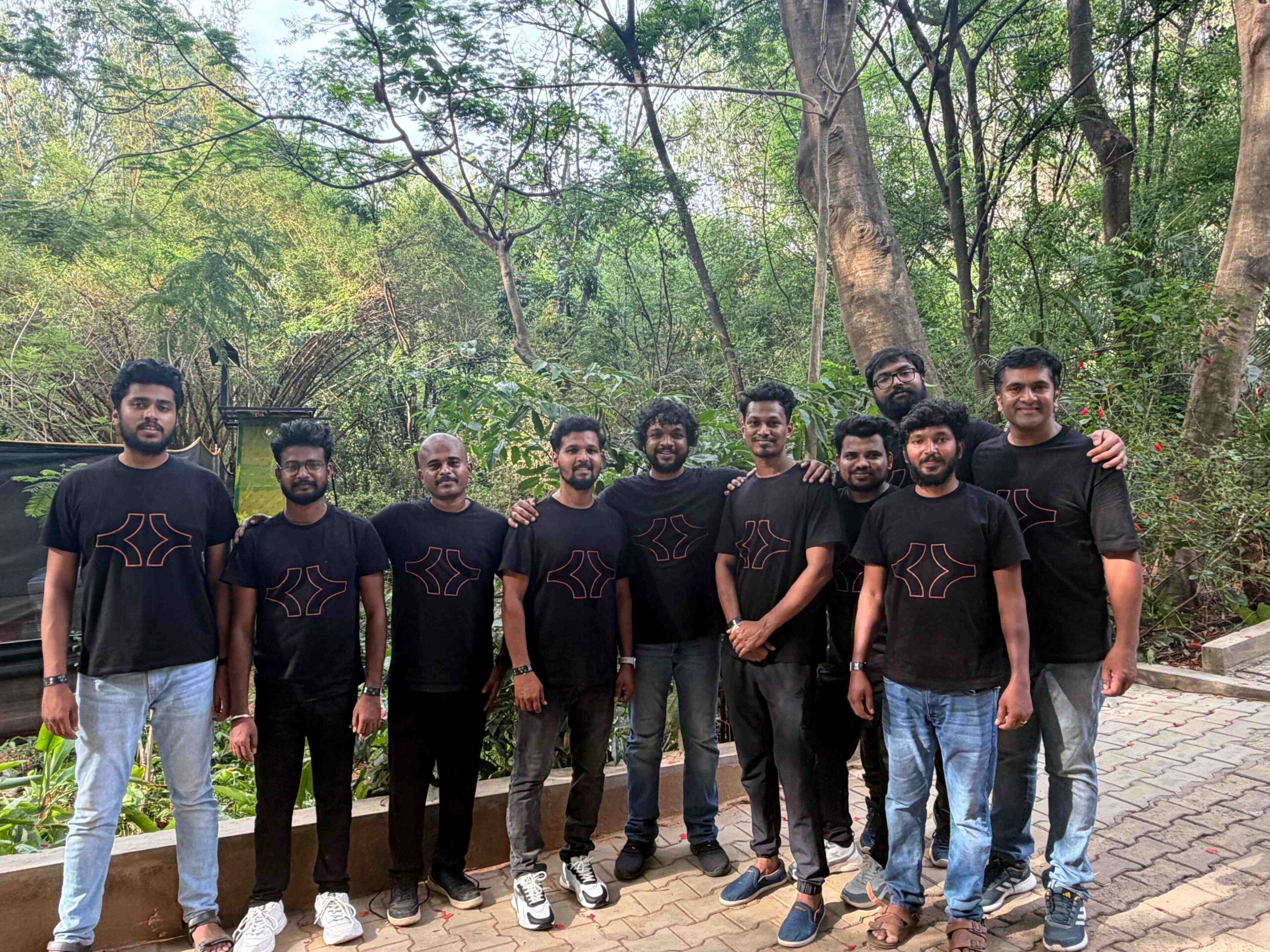
Ergon Labs is founded by Ashwin Ramanujam, an NITK Surathkal graduate who worked at Rimac Automobili in Croatia, the company behind what was, at the time, the fastest electric car in the world. The core team includes engineers with backgrounds atValeo, Sona Comstar and Toyota, bringing deep experience in power electronics, motor control, and automotive-grade EV system design.
The road ahead
The IPC is the first step in a longer integration journey. The next milestone is a 3-in-1 unit that folds the DC-DC converter into the same enclosure. After that, a fully integrated electronics module incorporating the VCU. And further out, an integrated e-axle that combines the electronics with the motor and gearbox, the same direction BYD has taken at the passenger vehicle scale. Each step eliminates another box from the vehicle and unlocks firmware capabilities that are impossible when the subsystems are bolted together from separate suppliers.
We want to be clear-eyed about the difficulty. Automotive supply chains move slowly. OEM qualification processes can take 12 to 16 months of testing and hundreds of thousands of kilometres of validation. The transition from 50 pilot units to reliably producing 10,000 units a month is one of the hardest things a hardware startup can do, and it is where many good companies with good technology have stumbled. Building an automotive-grade supplier business in India is a different kind of work from building a prototype.
But the core technical question, can you integrate an on-board charger and a motor controller into a single unit that works better than the separate components, has been answered. The thermal data is real. The on-road kilometres are real. At Rainmatter, we believe that the light EV transition in India will be won or lost on the quality of the underlying technology. The vehicles that charge faster, last longer, run cooler, and cost less to operate will win, and those attributes are determined not by the bodywork or the brand but by the powertrain electronics underneath. Ergon Labs is building that foundation, and we are glad to be along for the journey.
