
Introducing Delectrik
The Storage Gap
India has made remarkable strides in renewable energy. With over 250 GW of renewable capacity now installed and total generation crossing 500 GW, the country has emerged as one of the world’s largest clean energy markets. In 2025 alone, India added a record 44.5 GW of renewable capacity, nearly double the previous year. But there is a growing structural problem that threatens to undermine all of this progress. We simply cannot store the energy we produce.
Today, India has less than 1 GWh of commissioned battery storage against over 250 GW of renewable generation. The Central Electricity Authority estimates that India will need 411 GWh of energy storage by 2031-32, meaning the installed base needs to grow by roughly 500x in under seven years. The consequences of this mismatch are not theoretical. According to Mercom India, nearly 4 GW of solar and wind capacity in Rajasthan has faced curtailment since March 2025, with forced generation cuts reaching over 50% during peak solar hours, costing developers an estimated ₹250 crore in lost revenue. Tamil Nadu has seen weeks where 70 million units of renewable power could not be evacuated due to grid constraints. Solar capacity factors across the country have dropped from 35% to 22% as curtailment increases. In effect, we are building power plants and then throwing away their output because we have nowhere to put it.
The numbers tell a stark story. Every rupee invested in renewable generation requires roughly 40-60 paise in storage investment to be economically viable. India’s planned renewable buildout implies a storage opportunity worth tens of lakh crores over the next decade. The government recognises this. The Energy Storage Obligation, notified in 2022, already mandates that utilities procure energy storage starting at 1% of total solar and wind consumption (active since FY24), scaling to 4% by FY30. Viability Gap Funding schemes covering over 43 GWh of battery storage have been announced. The policy intent is clear, but what’s missing is the deployment.
Why Lithium-Ion Isn’t Enough
Lithium-ion batteries dominate the conversation around energy storage, and for good reason. They are excellent for short-duration applications of 1-4 hours. Your phone, your electric car, even a short-burst grid stabilisation system, lithium-ion handles all of these well. And costs have fallen dramatically, with cell prices dropping over 90% since 2010 to around $60-100/kWh today.
But India’s grid doesn’t need 2-hour storage. It needs 4-12 hours, enough to capture surplus solar during the day and dispatch it through the evening and night. This is precisely where lithium-ion becomes uneconomical. Beyond 4 hours, the cost curve for lithium-ion rises steeply because adding storage duration means buying entirely new battery packs. There are also degradation concerns. Lithium-ion cells lose capacity after 3,000-6,000 cycles and need replacement within 10 years, if not sooner. Fire safety codes require 6-metre spacing between lithium-ion containers and 30-metre setbacks from buildings, which significantly increases land use for large installations.
This is the gap that flow batteries are designed to fill.
How Flow Batteries Work
A vanadium redox flow battery (VRFB) stores energy in two tanks of liquid electrolyte containing vanadium ions in different oxidation states. When charging, electricity forces electrons from one tank’s electrolyte to the other. When discharging, the electrolytes flow through a central cell stack, and the resulting electron exchange generates usable electricity.
The critical insight is that power and energy are completely decoupled. Power output depends on the size of the cell stack. Storage duration depends on the size of the electrolyte tanks. Want to store energy for 10 hours instead of 4? Just use bigger tanks. No need to buy an entirely new battery system. The electrolyte itself never degrades. It simply cycles between charged and discharged states indefinitely. This gives VRFBs a cycle life exceeding 20,000 cycles and an operational lifespan of 20-25 years, with no thermal runaway risk and minimal maintenance.
At storage durations beyond 4 hours, VRFBs are already cheaper than lithium-ion on a levelised cost of storage basis. At 8 hours, the gap is substantial. At 12 hours, there is no contest.
Why India, and Why Now
First, regulatory mandates are creating structured demand. The Energy Storage Obligation, already in effect, requires utilities to progressively increase storage procurement to 4% of renewable energy consumption by FY30. The CEA projects a total storage requirement of 411 GWh by 2031-32, comprising 236 GWh of battery storage and 175 GWh of pumped hydro. The government has backed this with over ₹9,000 crore in Viability Gap Funding across two tranches, covering more than 43 GWh of standalone battery storage.
Second, the supply chain dynamics favour domestic manufacturing. Unlike lithium-ion, where China controls over 80% of cell manufacturing, vanadium flow battery supply chains can be meaningfully localised or sourced from other countries.
Why We Chose to Invest
At Rainmatter, we have been following the energy storage space closely, and Delectrik stood out for several reasons.
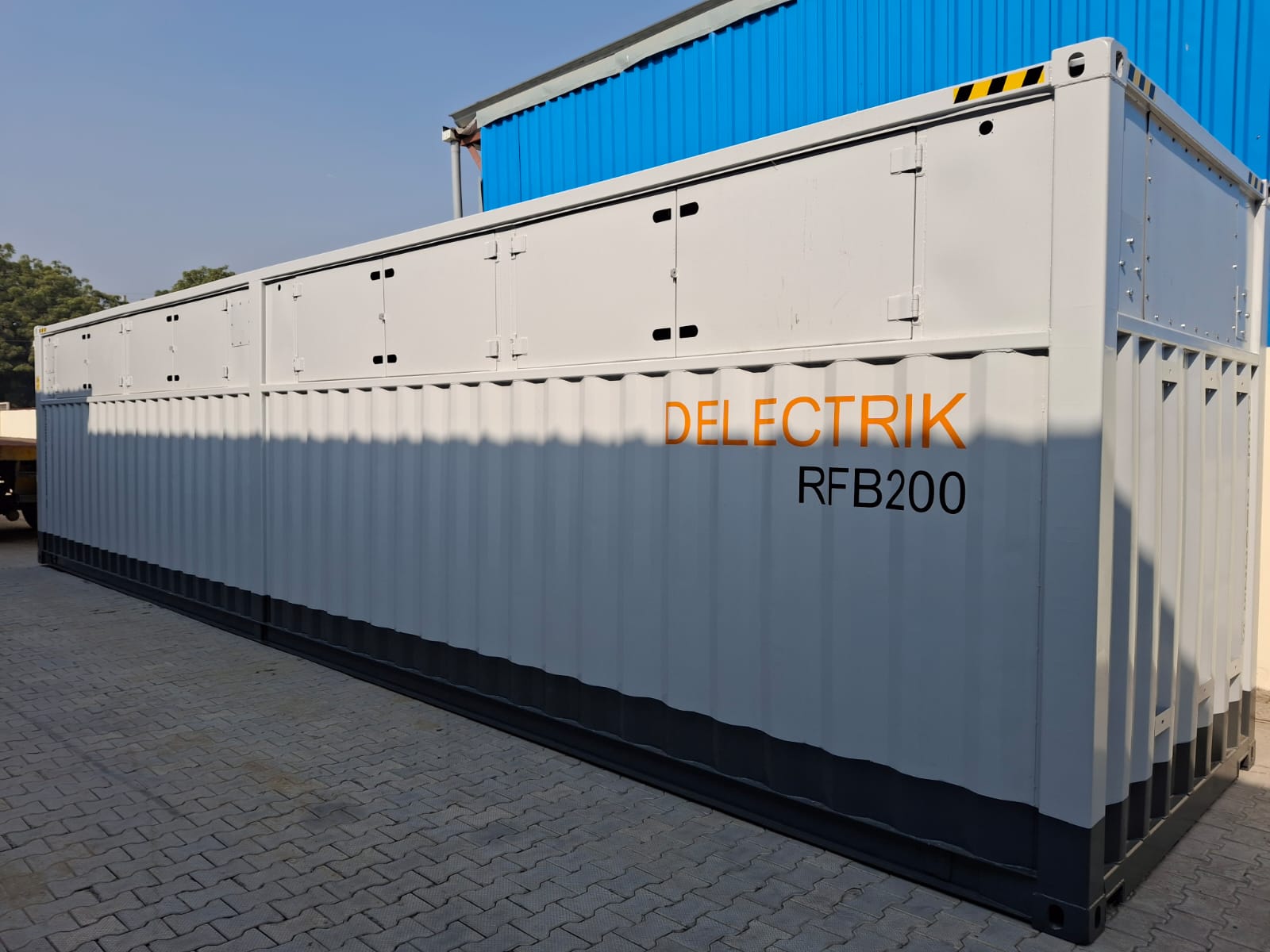
Delectrik Systems, founded by Dr. Vishal Mittal in 2016, is India’s only manufacturer of vanadium redox flow batteries at MW scale. They join a handful of global companies who have deployed non-Li battery technology at such scale. Vishal brings 20 years of industrial experience in fuel cells and flow batteries, having worked at Nissan, United Technologies, and Imergy Power Systems across the US, Japan, and India. His experience working at deep tech Fortune 500 companies and startups means he has seen both the promise and the pitfalls of this industry.
The technology risk is lower than it might appear. VRFBs are not a lab-stage concept. They have been commercially deployed at GWh scale globally. Delectrik’s own deployments of products ranging from kWh to MWh scale across varied climates and geographies provide meaningful validation.
Most importantly, this aligns with what we believe is one of India’s most critical infrastructure challenges. The energy transition cannot succeed without storage. Every solar park, every wind farm, every green hydrogen ambition ultimately depends on our ability to store and dispatch energy reliably. India needs to go from under 1 GWh of battery storage to over 200 GWh in the next six to seven years, a buildout of staggering proportions. And for the 4-12 hour durations the grid desperately needs, flow batteries offer a compelling path.
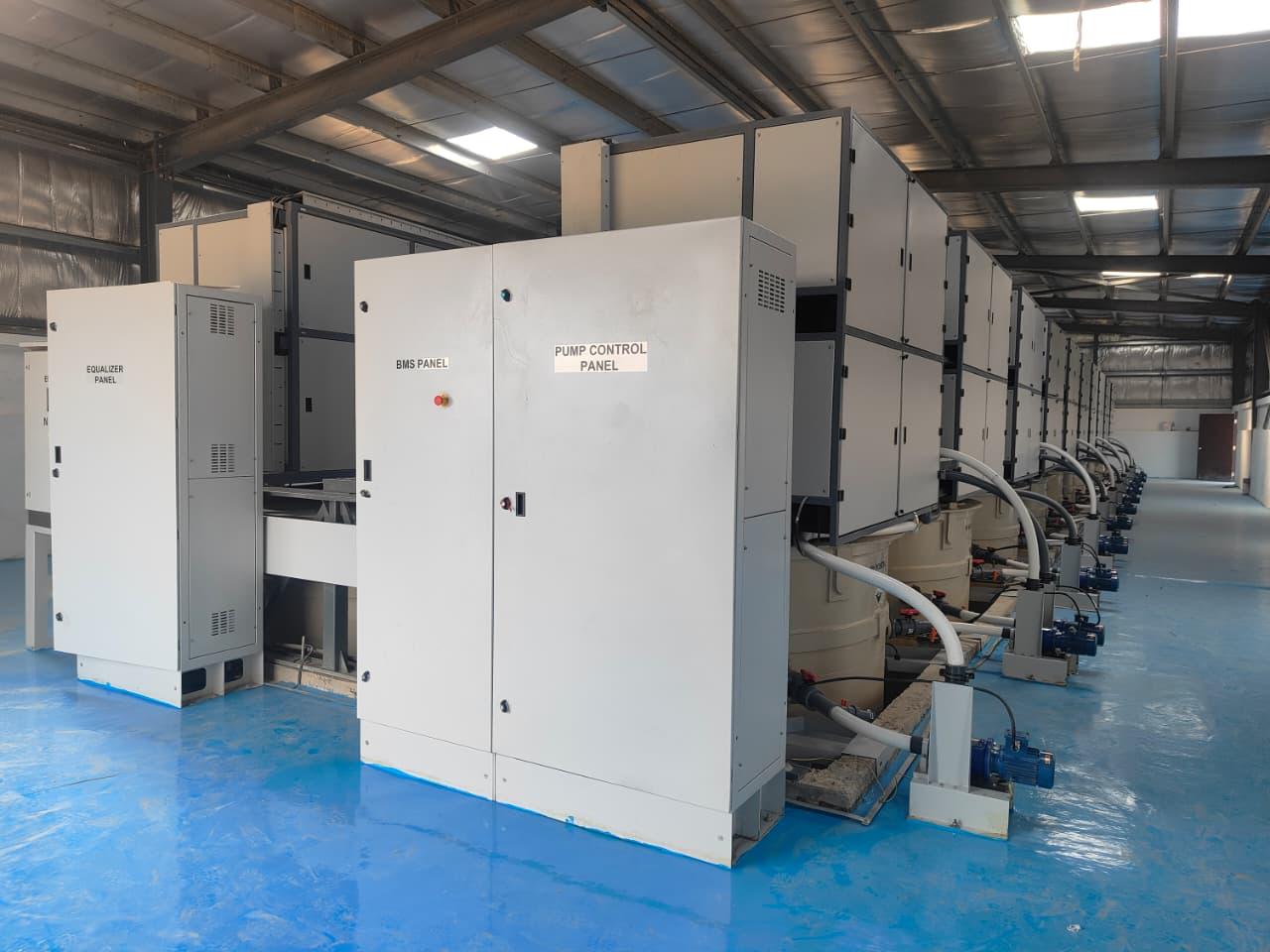
What Delectrik has achieved with minimal external capital is genuinely impressive. The company has deployed VRFB systems across 9 countries. Domestically, Delectrik deployed India’s first MWh-scale redox flow battery at NTPC NETRA, a 3 MWh system. The successful deployment has paved the way for the recent release of a 100 MWh flow battery tender and a few others in the pipeline in India. These will be some of the largest non-Li battery projects globally. Delectrik’s continuous technology development with other flow chemistries such as iron-chromium, and plans to integrate the upstream supply chain and downstream energy business with their wholly owned subsidiaries Delectrik Resources and Delectrik Esaas respectively, shows the clear intent to aggressively scale the technology and worldwide business to multi-GWh in the next few years.
We are excited to partner with Vishal and the Delectrik team on this journey. The road ahead, from MWh to GWh scale, is long and will require significant execution. But for a technology this important and a market this large, we believe backing the team that has quietly built more flow battery capability in India than anyone else is the way forward.

Great to see such a great invention.
Would like to know about it.