
Introducing AquaAirX Autonomous Systems
The world is entering a new phase of uncertainty. Rising geopolitical tensions, contested maritime zones, fragile supply chains, and climate-driven stress on coastal regions are reshaping how nations think about security, trade, and infrastructure. In this new reality, what lies beneath the water matters as much as what happens on land or in the air. Yet much of this domain remains under-observed and under-defended.
Ports, shipping corridors, offshore energy assets, and coastal infrastructure form the backbone of economic and strategic stability. At the same time, underwater environments are increasingly becoming zones of competition, risk, and opportunity.
Whether we view this moment as a challenge or an inflection point, one thing is clear: the future will belong to those who can operate autonomously, persistently, and seamlessly across air and water.
Why autonomy and why now?
For decades, underwater operations have depended on expensive vessels, imported systems, divers, and manual surveys. These approaches are slow, episodic, and difficult to scale, especially in shallow and nearshore environments where much of today’s activity occurs.
The pressures are mounting on multiple fronts. Maritime security concerns are rising. Shipping and port infrastructure must modernise without disruption. Offshore and coastal energy assets are expanding. Environmental oversight and accountability are increasing. All of this is unfolding alongside a global push toward self-reliance in critical technologies.
We believe the next leap will come from autonomous systems that can bridge air and water, enabling rapid deployment, persistent operations, and reduced dependence on heavy logistics.
That is why we are choosing to invest in AquaAirX Autonomous Systems.
What does AquaAirX do?
AquaAirX is a Bengaluru-based deep tech startup founded in 2024 by Jitendra Saini and Gouthami T S. They are building amphibious and underwater autonomous systems designed to operate seamlessly across air, surface, and underwater domains, backed by a multidisciplinary team spanning robotics, autonomy, and marine systems.
Their core focus is clear: enable autonomous operations where today access is limited, visibility is poor, and response times are slow. Instead of treating aerial drones and underwater vehicles as separate tools, AquaAirX is developing platforms that can fly to offshore or remote locations, transition autonomously into water, conduct underwater inspection, monitoring, or surveillance, and surface or return with minimal human intervention. This air-to-water continuity unlocks new operating models across strategic and industrial sectors.
Their flagship platform is AVATAAR, India’s first surveillance-class amphibious drone. AVATAAR can soar like a conventional UAV, land on water, and dive to complete missions subsurface. It has already achieved Technology Readiness Level 6, meaning a fully functional prototype has been tested in relevant operational environments, marking the transition from lab to real-world application. The company is also developing NEXOR and DeepNimbus, broadening their platform suite for different operational profiles, along with AquaAirX GCS, a unified ground control system that brings together telemetry, sonar visualisation, mapping, camera feeds, and mission automation into a single interface.
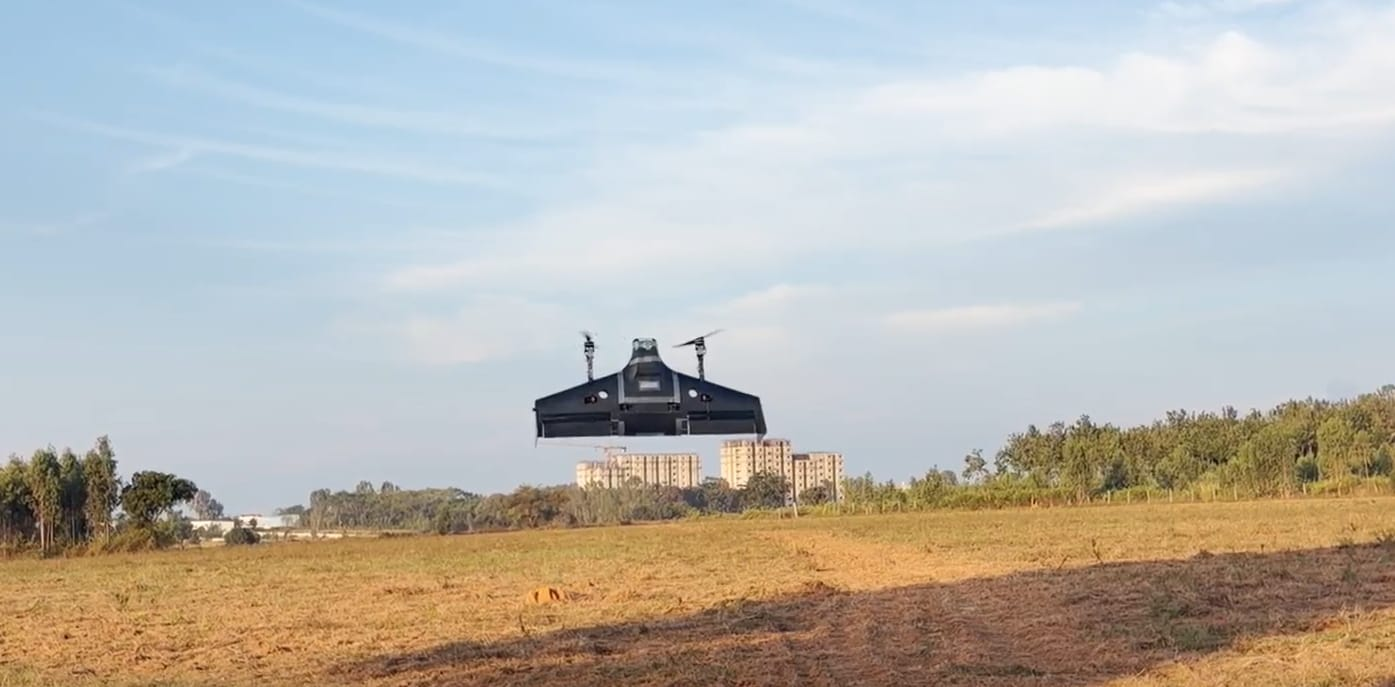
AVATAAR
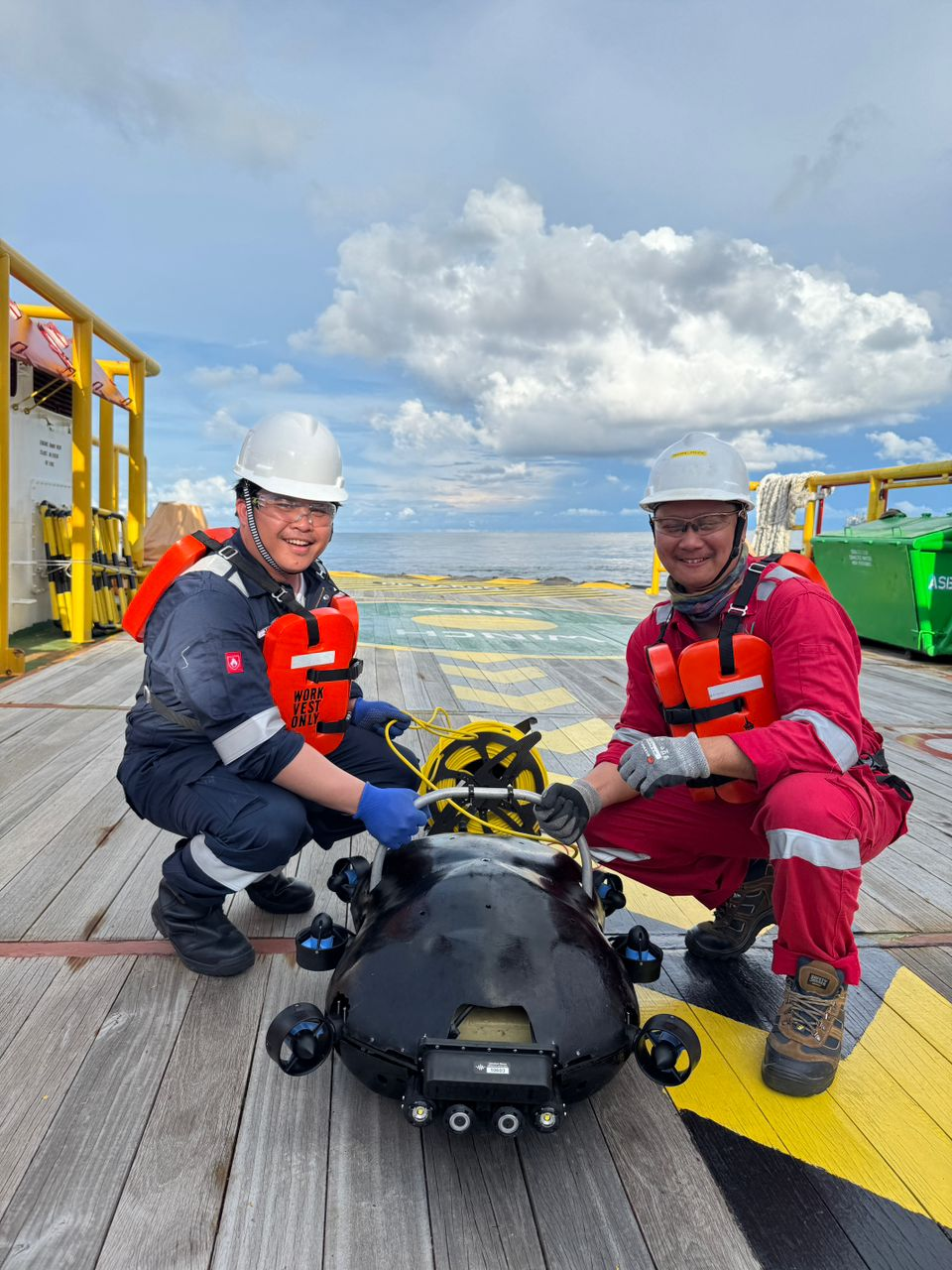
NEXOR
Where this capability matters
In defence and maritime security, shallow waters, harbours, and coastal zones are among the hardest areas to monitor. AVATAAR enables persistent multi-domain surveillance of ports and berths, supports ISR operations in littoral and near-shore environments, and can assist in rapid-response search and recovery in complex surface and subsurface conditions; all without the logistical overhead of large crewed platforms.
In shipping and ports, autonomous systems allow frequent inspection of submerged hull zones and underwater structures without disrupting operations or relying on divers. For energy and offshore infrastructure, pipelines, cables, and offshore installations face growing risks, and autonomous inspection reduces costs, improves safety, and enables early detection. And as industrial activity expands along coastlines, consistent underwater monitoring becomes essential for environmental compliance and long-term stewardship.
Why did we invest?
At Rainmatter, we look for founders building foundational capabilities and not just incremental improvements. In domains shaped by geopolitics, national priorities, and long time horizons, patient capital and technical depth matter.
Much of the technology in the maritime autonomy space today remains imported, expensive, and difficult to adapt to local conditions. AquaAirX represents a different path: designed and built in India, shaped by real operational constraints, and focused on autonomy rather than manual dependence.
What stood out to us about Jitendra and Gouthami was the first-principles approach they have taken to a genuinely hard problem. Air-to-water transition is not a software challenge; it demands deep integration across hardware, navigation, sensing, and control systems. The team has done that work. Their ability to reach TRL 6 within roughly a year of incorporation reflects both technical depth and execution discipline, which is rare at this stage.
The future of infrastructure, security, and sustainability will not stop at the water’s edge. As geopolitical realities evolve and nations invest in self-reliant technologies, autonomous systems that operate across air and water will become essential. We are excited to support AquaAirX on this journey.
