


November 16, 2026
New motor insurance rules: What changes from 15 December?
Satya Sontanam | Personal Finance
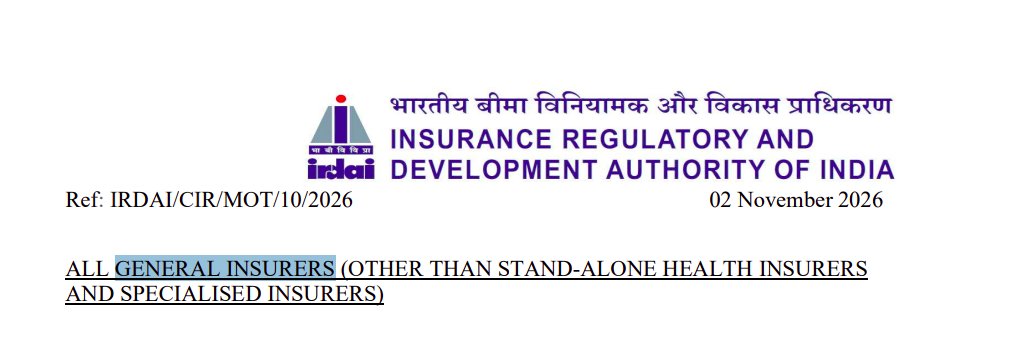
IRDAI has come up with a new motor insurance policy structure for private cars and two-wheelers. It applies to policies issued from 15 December 2026.
Under the new rules, a motor insurance policy will have four sections: third-party liability, passenger liability, personal accident and own damage.
Third-party liability and personal accident cover for the owner-driver are generally compulsory. Passenger liability and own damage are optional.
These insurance covers already exist. So, what exactly is changing?
The intention of the new rules is to make the choices clearer before someone buys insurance. Insurance companies must follow a common structure, give buyers a form to choose the covers they want, and clearly show how much each cover costs. They must also provide a Customer Information Sheet explaining the policy, something that was already required.
Let’s understand the four sections one by one.
1. Third-party liability
Suppose someone driving a car hits another vehicle or injures a pedestrian. They may have to pay for the damage or compensate the injured person.
Third-party liability insurance covers these payments under the policy’s terms.
For example, if a car owner causes an accident that damages another person’s car, this insurance can cover the amount the owner is legally required to pay.
But it does not pay for repairs to the car that caused the accident. That is where own-damage insurance, which we will discuss later, comes in.
Third-party liability insurance is already compulsory today and will remain compulsory under the new structure.
2. Passenger liability
Now suppose a car owner’s careless driving causes an accident and a friend sitting in the car is injured.
The friend can seek compensation from the owner. Passenger liability insurance covers that payment under the policy’s terms.
By the way, this section does not cover the owner or the owner’s parents, spouse and children.
Buying passenger liability insurance is optional. But that does not mean paying compensation is always optional. If the owner is legally responsible for an accident, they may still have to compensate the injured person, even without this insurance.
3. Personal accident cover
Personal accident insurance works differently.
Instead of paying compensation based on someone’s claim against the vehicle owner, this insurance pays a fixed benefit if the insured person dies or suffers a permanent disability covered by the policy.
Personal accident cover for the owner-driver is generally compulsory. However, there are exceptions. For example, owners who already have accident insurance that meets the rules may not need to buy it again.
Buyers can also choose personal accident cover for other passengers, including friends and family, or another driver. This part is optional and must be specifically included when buying insurance.
So, what is the difference between passenger liability and personal accident cover?
Passenger liability insurance covers the compensation that the vehicle owner is legally required to pay to an injured passenger.
Personal accident insurance pays a fixed amount if the insured person dies or suffers certain permanent disabilities in an accident. It does not depend on how much compensation someone claims from the owner.
4. Own-damage insurance
Own damage is about the vehicle itself.
Suppose a car is damaged in a crash, a flood or a fire, or is stolen. Own-damage insurance covers these losses under the policy’s terms.
For example, suppose a car owner hits another vehicle and both cars are damaged. Third-party insurance can pay for the damage to the other car, while own-damage insurance can pay for repairs to the owner’s car.
Own-damage cover is optional today and remains optional under the new structure. However, a bank or other lender may require it as a condition of a vehicle loan.
What about comprehensive and bumper-to-bumper insurance?
These are two terms we commonly hear when buying car insurance.
Comprehensive insurance generally combines third-party liability and own-damage insurance. It can also cover liability towards passengers under the policy’s terms.
However, this does not mean every passenger automatically has separate personal accident cover.
For example, if a friend sitting in the car is injured because of the owner’s careless driving, passenger liability insurance deals with the compensation the owner may have to pay. Personal accident cover, on the other hand, pays a fixed benefit if the friend dies or suffers a covered permanent disability. So, if someone wants personal accident protection for passengers, they need to check whether it is included.
Bumper-to-bumper insurance, on the other hand, usually means adding zero-depreciation cover to the own-damage part of a policy.
Here’s a hypothetical example.
Suppose replacing a damaged plastic part costs ₹10,000. Under a normal policy, the insurer may deduct ₹5,000 towards depreciation. The owner would have to pay that amount.
With zero-depreciation cover, this deduction can be removed. However, the owner may still have to pay certain other repair expenses under the policy.
Both comprehensive and bumper-to-bumper insurance have been available for years. In fact, all four insurance covers discussed above already exist.
The new rules are mainly about making the buying process clearer. From 15 December 2026, insurers must follow a common structure and show which covers the buyer has chosen and how much each costs.
IRDAI has not announced a general increase or reduction in premiums. The actual price will depend on the protection chosen and the insurer’s quote.
So, when buying or renewing motor insurance, it is worth checking what is included rather than going by names like comprehensive or bumper-to-bumper alone.